
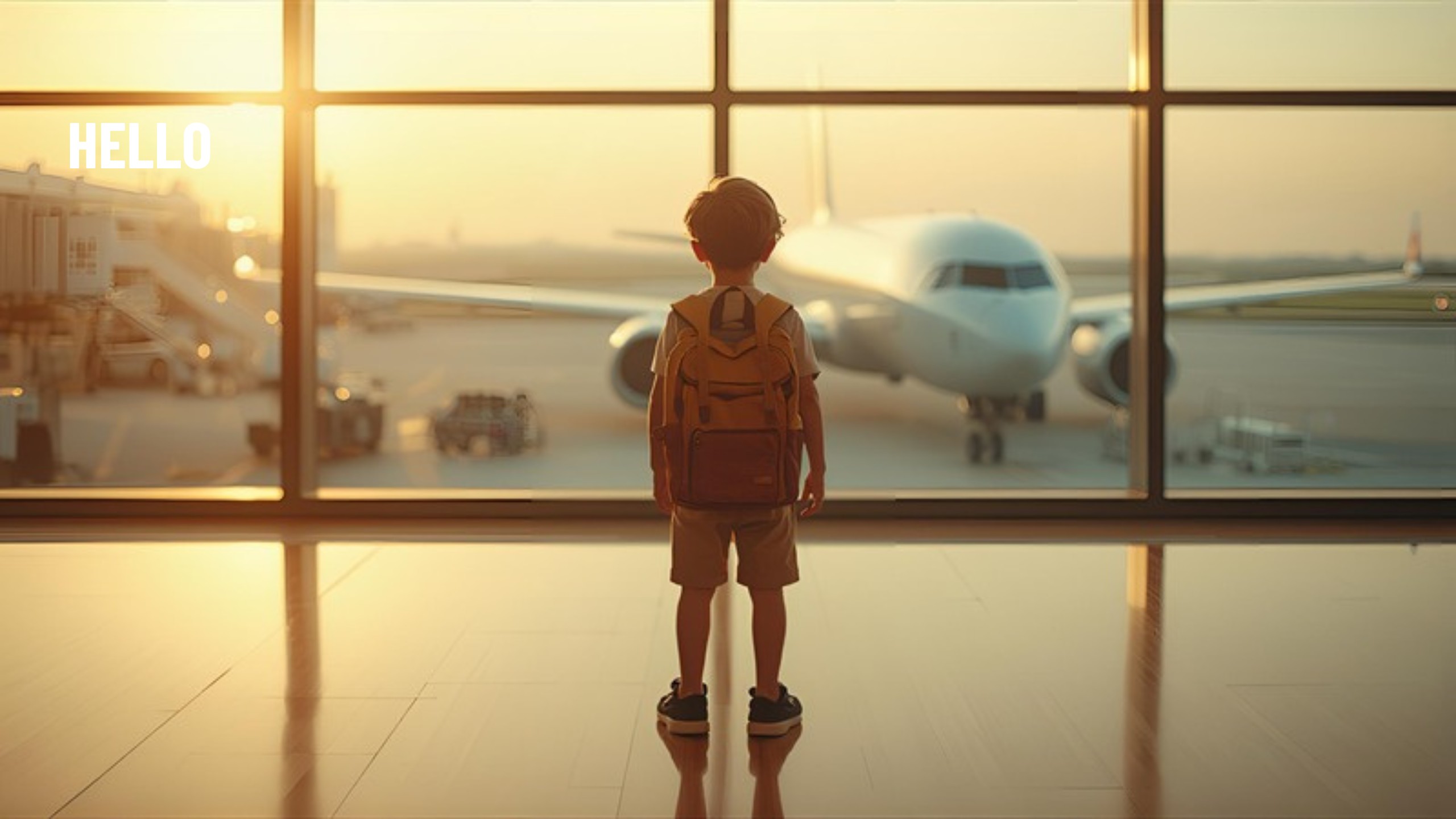
The first time we put our daughter on a plane by herself, she was nine. Johannesburg to Cape Town to spend school holidays with my mother-in-law — a two-hour domestic flight, one I’ve done dozens of times. Simple, right? I stood at the departure gate watching her small backpack disappear into the jetway and had a quiet, private meltdown.
She was completely fine. I was not.
If you’re considering letting your child fly alone — holiday visit to grandparents, a sports tour, a school trip that doesn’t include the parents — here’s what the airline brochures don’t quite cover.
What “unaccompanied minor” actually means
Airlines define an unaccompanied minor (UM) as any child travelling without a parent or guardian. The age brackets vary by carrier, which is the first thing that trips people up. Most airlines apply UM status to children aged 5 to 11, making it mandatory. Between 12 and 15, it’s often optional: you can request the service, or let them fly as a regular passenger. From 16 onwards, most airlines treat them as adults.
This matters because the UM service is not just a badge and a lanyard. There’s a fee (usually somewhere between R500 and R1,500 on South African domestic routes, more for international) and a specific handover process. You cannot drop your child at check-in and leave. You’ll need to stay until they board. Whoever collects them on the other end needs photo ID, and their name must be on the form you filled in at booking. No form, no child.
The paperwork you actually need
This is where parents get caught out. For international travel, an unaccompanied minor who is a South African citizen needs:
- A valid passport
- An unabridged birth certificate (the long one, with both parents’ details)
- A parental consent affidavit if travelling without both parents, commissioned by a commissioner of oaths
- The airline’s own UM form, completed in full
- Contact details for the person collecting them
Some airlines also want a letter from the receiving adult confirming they’ll be at the airport. Check with your specific carrier. Requirements shift more than you’d expect, and discovering you’re missing something at check-in is a particular kind of awful. For domestic travel, requirements are lighter, but carry the birth certificate anyway.
What happens once they’re through
Airlines with proper UM programs assign a staff member to escort your child through security, to the gate, and onto the plane. Cabin crew are notified. Your child’s seat is flagged and they get checked on. On arrival, the child doesn’t leave with other passengers. They wait, get escorted off, and go to a UM waiting area until whoever is collecting them shows up with ID.
It’s a documented handover process. Understanding that was what finally made me feel okay about it.
What varies a lot is how that actually goes for the child. A good UM escort is warm and chatty and makes the kid feel like a bit of a VIP. A bad one is perfunctory and bored, and your child will notice. You can’t control which you get, so it’s worth preparing your child to handle some waiting and uncertainty without it becoming a crisis.
How to prepare your child (not just for the flight)
Start with the basics: their full name, your phone number, the name of the person collecting them, and what to do if something feels off. We drilled this with our daughter like a game but we weren’t casual about it.
Pack a carry-on that covers boredom properly. A long flight for a nine-year-old with no parent to manage the situation is a different animal. Headphones, downloaded shows, a book, snacks they actually like. Don’t assume the in-flight entertainment will cooperate.
Walk them through the whole process before you leave. Gates, waiting areas, the escort, the collection point. Kids handle transitions better when they’re not surprised by them. A lot of anxiety is really just not knowing what’s coming next.
And then let them feel proud of themselves when they do it. My daughter came off that first flight absolutely glowing. She’d gone somewhere alone and arrived. That was real, and it stuck.
Which airlines to consider
On South African domestic routes, both Kulula and FlySafair offer UM services, though the thoroughness varies. For international travel, Emirates, British Airways, and Singapore Airlines have well-established programs, with dedicated UM lounges at some hubs. Read recent reviews for specific routes before committing. Parents on travel forums are often brutally specific about what the experience was actually like.
Budget carriers are patchy. Some don’t offer UM services at all, which means a child under 12 simply cannot fly alone with them. Check before you book.
When the honest answer is: not yet
The right age is not the airline’s minimum age. It’s the age at which your specific child can handle it. A confident eight-year-old who takes new situations in stride is not the same as a cautious ten-year-old who finds transitions genuinely hard. You know which one you have.
There’s also a gap between a two-hour domestic hop and a twelve-hour international journey with a connection. If you’re uncertain, start small. Do the short flight first. Let them build experience, and let yourself get comfortable with the idea gradually.
My daughter has now done the Johannesburg-Cape Town route six times on her own. She picks her own seat, tells me what snacks to pack, and sends me a selfie from the gate. I still have a slightly anxious forty minutes at arrivals every single time.
She walks through just fine. She always does.